Lhasa · One City, One Color
Lhasa’s colors are Monastery Crimson and Prayer Flag Gold — the deep red of Potala Palace walls catching the last light of the Tibetan sun, the golden rooftops of Jokhang Temple blazing against a cobalt sky, the five-colored prayer flags snapping in the thin plateau wind.
At 3,650 meters above sea level, Lhasa is the highest capital on earth, and its cuisine is shaped by the altitude. Nothing grows easily here. Highlanders have spent centuries perfecting a diet of roasted barley, yak products, and salted butter tea — calorie-dense, warming, and tailored for survival on the roof of the world. Eating in Lhasa is not just a meal; it is a lesson in how humans adapted to one of the planet’s most extreme environments.
Signature Street Foods
Tsampa
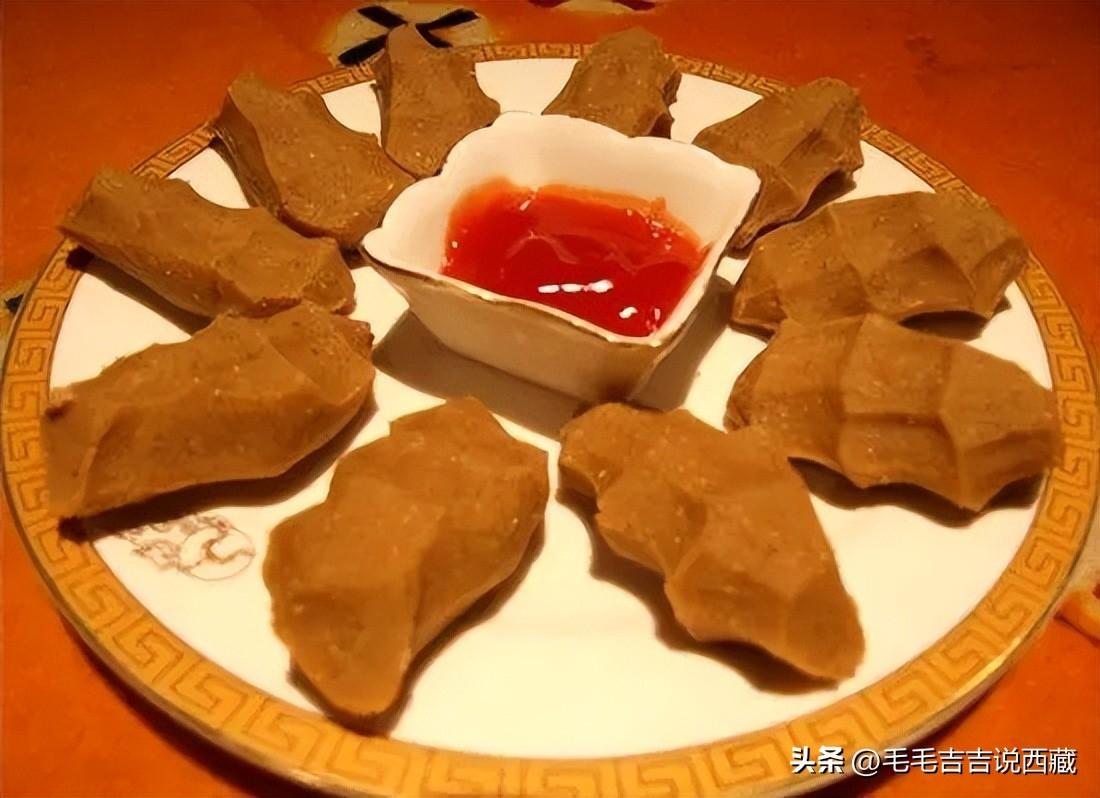
The foundation of Tibetan life. Highland barley is roasted over a yak-dung fire — the traditional method that imparts a smoky, nutty depth — then stone-ground into a fine flour. At a tea house along Barkhor Street, a server brings hot yak butter tea and a bowl of tsampa flour to your table. You mix them yourself, kneading the flour into a dough ball with your fingers, eating it alongside strips of dried yak meat and pickled radish. It is earthy, sustaining, and tastes of the plateau — a food that has fueled Tibetan nomads for millennia.
Tibetan Momo
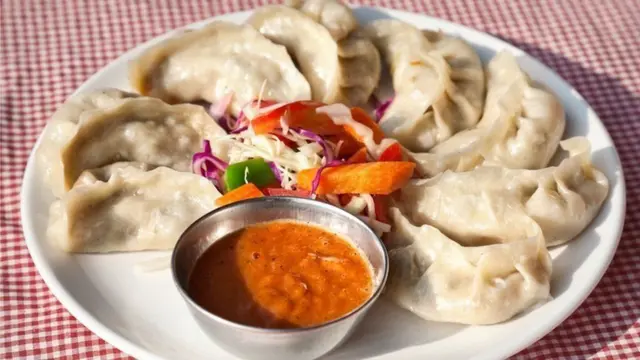
The Tibetan dumpling is a world away from its Chinese cousins. At Lhasa Kitchen Momo House on Beijing Dong Lu, the yak meat filling is hand-chopped, never ground — preserving a chunky, juicy texture inside a wrapper thinner than any jiaozi. Each momo is hand-pleated into a crescent and steamed until the wrapper turns translucent. They arrive with a bowl of sepen — a fiery Tibetan chili dip made from roasted Sichuan pepper, garlic, and tomato — that cuts through the richness of the yak meat. A plate of ten disappears faster than you expect.
Yak Butter Tea
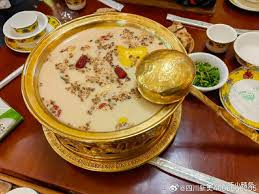
The lifeblood of the plateau. Black tea is boiled, poured into a wooden churn with a generous slab of yak butter and a pinch of salt, then churned until it emulsifies into a creamy, savory broth the color of weak coffee. At the Sweet Tea House on Jiangsu Lu, it arrives in a thermos — you pour and sip throughout the day. The butter leaves a protective film on your lips against the dry plateau wind, and the warmth radiates from your stomach outward. It is an acquired taste for visitors, but one that quickly becomes essential at altitude.
When to Visit
May to October offers the most forgiving weather — clear skies, daytime temperatures in the high teens, and the lowest risk of altitude sickness. August brings the Shoton Festival, when giant thangkas are unfurled at Drepung Monastery and Tibetan opera fills Norbulingka Park. Barkhor Street’s pilgrimage circuit is at its most vibrant, and the tea houses are full of pilgrims and travelers sharing stories over thermoses of butter tea. Budget $10–20 per day — momos from $2, tea from $1, temple entry fees $10–15.
Must-Visit Food Streets
| Restaurant | Location | Signature Dish |
|---|---|---|
| Barkhor Street Tea House | Barkhor Street, Chengguan | Tsampa |
| Lhasa Kitchen Momo House | Beijing Dong Lu, Chengguan | Tibetan Momo |
| Sweet Tea House (Tibetan Tea House) | Jiangsu Lu, Chengguan | Yak Butter Tea |